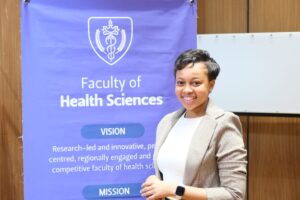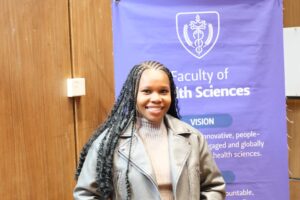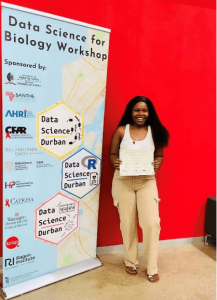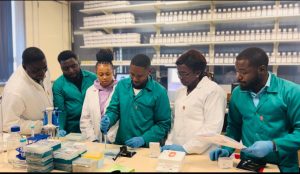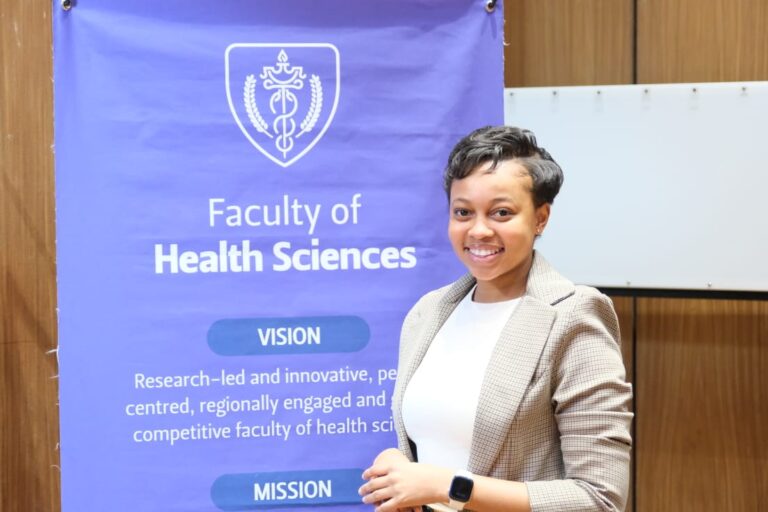
Sesiyanda Maseko is a Master of Medical Science student specialising in Virology, supervised by Prof Martin Nyaga, Dr Milton Mogotsi, and Dr Kwe Yinda Claude. Her research, titled “Whole genome characterisation of noroviruses detected in children under five years from Gauteng, South Africa,” investigates the genetic diversity of noroviruses — one of the causes of viral diarrhoea in young children.
“My work, particularly the improved understanding of circulating norovirus strains, can inform better diagnostic tools, strengthen surveillance systems, and ultimately support healthier outcomes for children – especially in Africa, where the disease burden is high and data remains limited,” she explains. “That’s why I’ve taken every opportunity to share my research with wider audiences – to raise awareness of its importance and to contribute to the broader scientific conversation on child health and infectious diseases.”
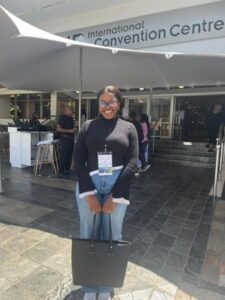
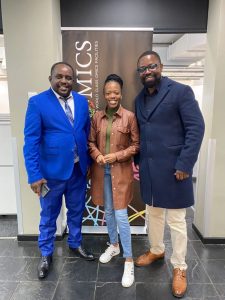
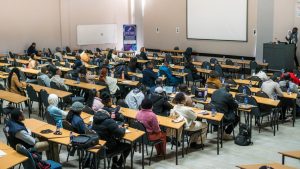
The 8th CSIR Emerging Researchers Symposium, hosted at the CSIR International Convention Centre in Pretoria, marked Ms Maseko’s first experience presenting her research. It offered an opportunity to share her findings with a diverse audience of scientists and emerging researchers, leading to insightful discussions that deepened her curiosity about her project and influenced the way she approaches it. The experience reminded her that her research is more than an academic pursuit – it is a meaningful way to make an impact in the world. Being surrounded by scientists driven by curiosity and innovation was both exciting and inspiring, reinforcing the idea that, despite working in different disciplines, researchers share a common goal: to contribute to a better South Africa and, ultimately, a better world.
Continuing her commitment to making science accessible, Ms Maseko took part in the Three Minute Thesis (3MT) competition, where she won first place in the university’s institutional level. Her winning presentation, titled “One Virus Diagnosed, Many More Hidden: Genomics Unmasks Missed Viruses Behind Childhood Diarrhoea,” was recognised for its clarity and impact. It effectively bridged the gap between scientific complexity and public understanding, transforming advanced genomic research into a compelling story that resonated with both scientific and non-scientific audiences.
Reflecting on the moment her name was announced, Ms Maseko admitted she was taken by surprise. “I was honestly shocked. The level of competition was so high that winning never crossed my mind. When my name was called, it felt surreal, a mix of disbelief, excitement, and gratitude all at once.”
Reflecting on the two platforms that allowed her to share her research, Ms Maseko emphasises the importance of making science both accessible and people-centred. Research gains its true value when it serves humanity,” she says. As she continues to develop as a scientist, her goal remains clear – to pursue research that not only advances scientific understanding but also contributes meaningfully to improving lives. She concludes by expressing sincere gratitude to her supervisors and to the UFS NGS Unit members for their guidance and support.